
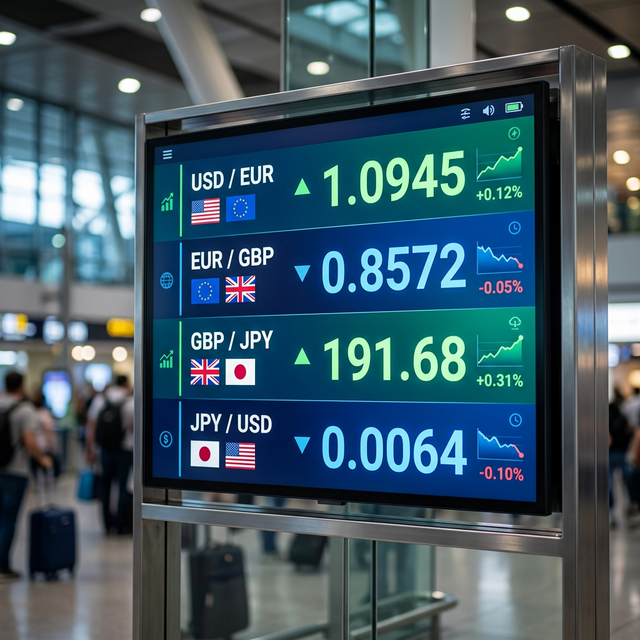
Understanding the USD/EUR Exchange Rate
The USD/EUR exchange rate is the most traded currency pair in the world. Understanding how it works helps you time your transfers better and get more euros for your dollars.
Factors That Affect the Exchange Rate
Interest Rate Differentials
The biggest driver of the USD/EUR rate is the interest rate differential between the Federal Reserve and the European Central Bank. When the Fed raises rates faster than the ECB, the dollar strengthens against the euro.
Economic Data
Key economic indicators that move the exchange rate include:
- GDP growth: Stronger growth typically strengthens a currency
- Inflation data: Higher inflation may weaken a currency long-term
- Employment figures: Strong job markets support currency strength
- Trade balance: Trade surpluses tend to strengthen a currency
Geopolitical Events
Political uncertainty, elections, and global events can cause significant exchange rate movements. The euro is particularly sensitive to eurozone political developments.
How to Get the Best USD to EUR Rate
1. Use the Mid-Market Rate as Your Benchmark
The mid-market rate (also called the interbank rate) is the rate you see on Google or XE.com. This is the "true" exchange rate without any markup. Always compare a provider's rate against this benchmark.
2. Compare Multiple Providers
| Provider | Typical Markup | Transfer Fee | Best For | |----------|---------------|--------------|----------| | Your Bank | 3-5% | $15-35 | Convenience | | Wise | 0% | 0.5-1% | Best overall value | | OFX | 0.5-1% | $0 | Large amounts | | Revolut | 0-1% | $0 | Quick transfers | | PayPal | 3-4% | Varies | Small amounts |
3. Set Up Rate Alerts
Most fintech providers offer rate alerts. Set your target rate and you'll be notified when the exchange rate reaches your desired level.
4. Use Forward Contracts
If you need to exchange a large amount in the future, a forward contract lets you lock in today's rate for a future transfer. This eliminates exchange rate risk.
5. Avoid Airport and Hotel Currency Exchange
Airport and hotel currency exchange services typically offer the worst rates, with markups of 5-15%. Always exchange currency online before you travel.
Historical USD/EUR Trends
Over the past five years, the USD/EUR rate has ranged from approximately 0.82 to 0.96. Understanding historical trends can help you set realistic expectations for rate alerts.
Tax Implications
Large currency exchanges may have tax implications. In the US, gains from currency exchange are taxable. Keep records of your exchanges and consult a tax professional if you regularly exchange large amounts.
Conclusion
Getting the best USD to EUR rate comes down to three things: choosing the right provider, timing your transfer well, and avoiding unnecessary fees. By using the strategies outlined in this guide, you can save 2-5% on every exchange compared to using your bank.